Day: November 6, 2025

CRM Gets Cuddly The Rise of Adorable User InterfacesCRM Gets Cuddly The Rise of Adorable User Interfaces

For decades, Customer Relationship Management (CRM) software has been the stern, all-business engine of sales teams—powerful but often intimidating. In 2024, a surprising trend is humanizing this critical tool: the integration of adorable, emotionally intelligent design. This isn’t about adding cartoon mascots for fun; it’s a strategic shift towards reducing user friction. A recent study found that 68% of employees are more likely to consistently use software with a positive and engaging user experience. Adorable CRM design, with its soft colors, friendly micro-interactions, and approachable language, directly tackles the high adoption failure rates that have plagued the industry for years.

The Psychology Behind the Pixar-fication of Dashboards

The core principle is simple: people don’t engage with what they dread. A complex, data-dense interface can trigger anxiety, leading sales reps to find workarounds, which defeats the entire purpose of a centralized system. Adorable design leverages principles of positive psychology. Soft, rounded shapes and warm color palettes are processed by the brain as non-threatening. Celebratory animations for closing a deal or a friendly, encouraging message when a task is completed provide micro-rewards. This transforms data entry from a chore into a more gratifying experience, fostering consistent and accurate use of the platform.

  • Gamified Progress: Instead of a stark progress bar, a small plant grows as a deal moves through the pipeline.
  • Empathetic Notifications: A message reading “You’ve been busy! Don’t forget to follow up with Sarah,” feels more supportive than a generic “Task Overdue.”
  • Character-led Guidance: A simple, friendly bot character can guide new users through setup, reducing initial frustration.

Case Study: Bloom & Grow’s Flourishing Sales Team

A mid-sized horticultural company, Bloom & Grow, struggled with its clunky, legacy CRM. Their sales team, comprised of plant enthusiasts who loved nature, dreaded the sterile interface. After switching to a modern platform emphasizing “adorable” UX, their data integrity skyrocketed. The new system used organic, growth-themed visuals and calming green hues. Reps reported feeling less stressed when updating client records, and within six months, the company saw a 40% increase in logged customer interactions, leading to more personalized service and a 15% uptick in repeat business.

Case Study: Pawsitive Results at a Veterinary Chain

A national veterinary chain implemented a CRM designed specifically for pet care. The interface featured playful animal avatars for each client (the pet) and used language like “Paw-lease schedule a follow-up.” While undeniably cute, this design was strategically brilliant. It resonated deeply with the staff’s passion for animals, making the administrative side of their job feel more aligned with their mission. This led to a 55% faster onboarding time for new receptionists and a notable improvement in staff morale, as the software itself became a source of small, positive moments throughout the day.

Adorable CRM is not a gimmick; it is a sophisticated understanding that the user on the inside of the screen is just as important as the customer on the outside. By designing for human emotion and reducing cognitive load, businesses are finally unlocking the true potential of their gohighlevel investments, proving that sometimes, a little cuteness can be the key to serious results.

How Microcontroller CPUs Revolutionize Smart Devices in Our Everyday LivesHow Microcontroller CPUs Revolutionize Smart Devices in Our Everyday Lives

Introduction: The Smart Revolution

Imagine stepping into your living room, and with just a tap on your phone, the lights dim, the temperature adjusts, and your favorite music plays. Sounds dreamy, right? This is all possible thanks to microcontroller CPUs. In fact, data indicates that the demand for smart home devices has surged by more than 30% in the last few years. But here’s the catch: have you ever considered what makes these nifty gadgets tick? (Spoiler: it’s these tiny yet powerful processors.) Ready to dive into how they work?

Traditional Solutions and Hidden Pain Points

Let me tell you: many of the traditional solutions that manage smart devices have a few hiccups. Ever felt like your phone’s smart app just wouldn’t connect to the living room lights? That’s because older systems can fail due to slow response times or poor integration. Once you stack multiple devices, the weak links in power converters or data processing become clear. (That’s where edge computing nodes shine!) Microcontroller processors provide a better alternative, bridging gaps that lead to user frustration. Look, it’s simpler than you think: by shifting complex computations closer to the devices they serve, they dominate; always keeping pace with your needs.

How Are These Pain Points Being Addressed?

By using advanced microcontroller CPUs, manufacturers can mitigate many of these issues. With built-in features for enhanced connectivity and a focus on real-time data processing, these chips are tackling the flaws of traditional solutions head-on. Manufacturers of microcontroller processors are continuously innovating, integrating wireless technology, and enhancing computational efficiency. Thus, the smart devices we all cherish are becoming increasingly reliable and responsive. Moving forward, the smart home experience will only get better as these technologies mature—how exciting is that!

New Technology Principles Transforming the Future

Now, let’s shift gears and talk about what lies ahead. The principles driving new microcontroller CPU designs focus not just on processor speed but on intelligent energy management and data analytics. These principles pave the way for more power-efficient devices that learn and adapt to user preferences. (Isn’t it cool how tech can actually become more like a friend?) The future of smart homes relies heavily on the capabilities of these advanced chips—think machine learning on a chip! With microcontroller processors continually evolving, they ensure your devices will not just connect seamlessly but think smartly.

What’s Next for Smart Devices?

As we look ahead, the impact of microcontroller CPUs on our daily lives cannot be understated. These little powerhouses will drive innovations we can only dream of today. Manufacturers are now pouring resources into developing chips that handle complex AI tasks while still fitting into our everyday appliances! No more “dumb devices”—every gadget will continuously learn and respond to our habits. In the end, embracing smart technology becomes less about interfaces and more about life’s seamless integration with the devices around us. Remember, as advances unfold, keeping an eye on performance metrics is key! Key evaluation metrics for choosing microcontroller solutions include energy efficiency, processing speed, and integration capability.

In conclusion, the journey through the capabilities of microcontroller CPUs reveals a bright future for technology in our homes. Every lesson learned enhances our daily experiences. Curious about exploring this tech-driven landscape? Dive into more from UniBetter, where innovation meets user needs!

Why Do TOPCon Solar Cells Underperform in Factory Scale-Up?Why Do TOPCon Solar Cells Underperform in Factory Scale-Up?

Introduction: A Technical Reality Check

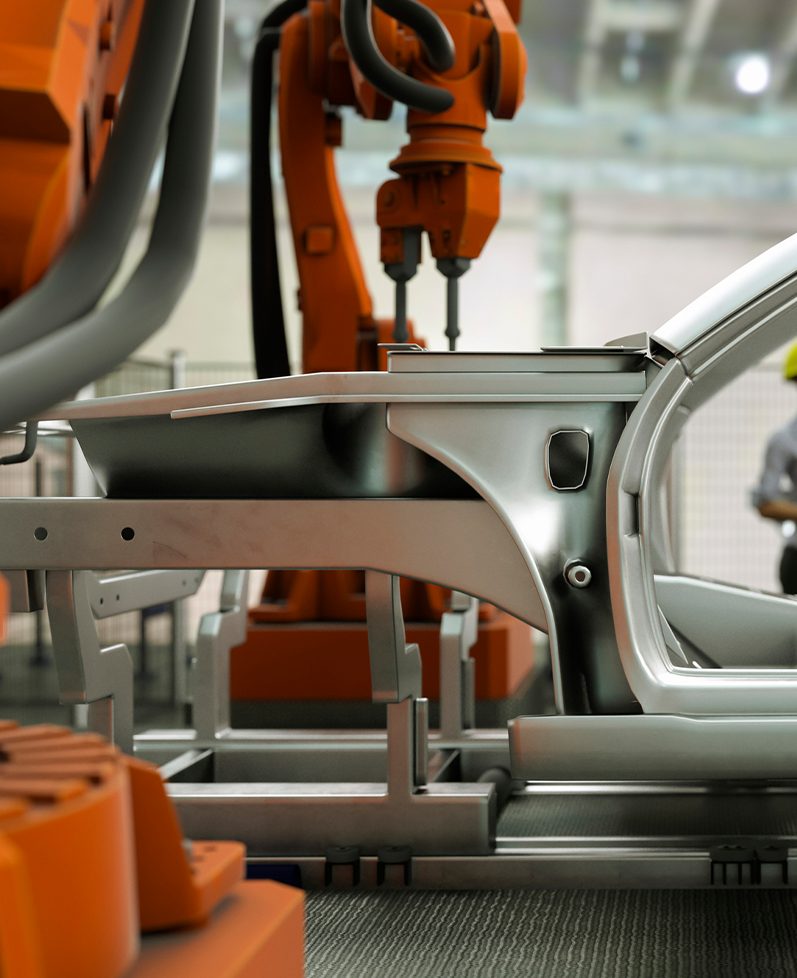
Scale-up looks simple on a spreadsheet: raise yield, cut cost per watt, and keep the line stable. The topcon solar cell sits at the center of that plan. Picture shift change at a high-volume line inside a solar panel manufacturing factory: the buffer is full, the diffusion furnace starves, and a supervisor flags rising breakage on thin wafers. MES shows scrap up 2.7% week over week; EL images show hotspots near busbars; silver paste prices zigzag. Energy costs are up 11% YoY, and the SPC dashboard pings for tunnel oxide drift. The business case strains as OEE slides below 78%, even while takt time was “optimized.” Why does a well-funded plan wobble when the wafers hit the rollers—especially when every KPI had a target? Are the bottlenecks technical, or are they inherited from older playbooks? (Hint: a bit of both.) The good news is that the patterns are repeatable, which means the fixes can scale, too. Let’s unpack the pressure points and then compare how legacy fixes stack up against a modern line design.

topcon solar cell

Comparative Insight: Where Old Fixes Fall Short

Where do legacy fixes break?

Direct take: retrofitting PERC habits onto TOPCon is the first trap. The passivated contact stack is less forgiving; tunnel oxide uniformity needs tight control. Copying a PERC diffusion recipe and just “turning the knobs” leads to higher variability in iVoc, then yield slippage. Wet benches tuned for older wafers trigger micro-cracks on thinner glass; later, EL catches the defects after value is added—funny how that works, right? Silver-heavy screen printing also drags cost per watt when metallization is not tuned for contact resistivity. Meanwhile, batch tools with long queues hide variation, so SPC reacts late. Look, it’s simpler than you think: the process window narrowed, but the feedback loop didn’t speed up.

Second trap: infrastructure inertia. Power converters sized for yesterday’s ovens trip under new thermal profiles. Edge computing nodes for inline metrology are missing, so defect classification waits on the server and arrives after shift-end. Laser doping settings drift because recipe versioning in the MES is loose, and rework rules are unclear. Result: stop-start flows, lower OEE, and more outliers. Even maintenance timing lags; PECVD chambers need shorter, smarter cleans, yet PMs follow an old-hour count. The outcome is predictable—more variability at metallization, higher PID risk down the chain, and buyers asking for discounts. These are not exotic failures; they are system mismatches between a tighter TOPCon stack and a slower control loop.

Forward-Looking: Case Examples and Next Moves

What’s Next

Consider a mid-size solar panel manufacturing factory that re-sequenced its line rather than just upsizing tools. It inserted inline metrology right after tunnel oxide formation, pushed SPC to the edge (near the tool), and closed the loop to adjust PECVD parameters in near real time. Diffusion furnace recipes were split by wafer lot stiffness to reduce bow. Copper plating pilots trimmed silver paste grams per cell, while new stringer profiles reduced thermal stress. The factory also tuned lamination press profiles to better handle passivated contacts. Small moves, fast feedback. The effect: fewer surprises downstream, and a cleaner IV curve. Semi-formal point here—control latency kills margin; cut the latency, save the plan.

topcon solar cell

Future outlook is practical, not hype. More plants will pair ALD or hybrid deposition with smarter clean cycles, use inline EL plus AI defect tagging, and plan capacity with true tool-to-tool takt matching. Energy intensity will sit on the dashboard next to yield, not below the fold. And yes, operations will hard-limit recipe sprawl through MES governance—dashboards that people actually use. Advisory close with three metrics to choose solutions: first, junction quality that you can prove (iVoc plus EL defect density before and after metallization); second, OEE with time-to-95% nameplate as the ramp KPI; third, cost per watt tied to energy intensity (kWh/W) and silver grams per cell. Pick vendors and methods that move those three lines, then keep auditing. For a broader industry view and integration know-how, see LEAD.

Revolutionizing The Way Audiences See Live Games Through The Evolution And Design Of Modern Font Sports Broadcasting In The Digital EraRevolutionizing The Way Audiences See Live Games Through The Evolution And Design Of Modern Font Sports Broadcasting In The Digital Era

Sports broadcast medium has changed over the past few decades, evolving from simpleton wireless commentaries to immersive, high-definition whole number experiences that millions of fans around the earth in real time. The industry has become one of the most authoritative sectors of modern font media, formation how populate wage with their favourite teams, athletes, and recreation events. Today, sports broadcasting is not just about delivering the game; it s about storytelling, engineering, and fan participation, all coming together to create a mighty planetary entertainment go through that transcends geographic and appreciation boundaries.

In the early on days, sports broadcast medium was primarily confined to radio, where burning commentators varicolored vivid pictures with run-in, allowing listeners to visualize every play and movement. The intro of television system brought about a construction shift, facultative fans to take in games extend before their eyes. This ocular connection revolutionized fan , transforming athletes into international icons and diversion events into solid entertainment glasses. Over time, bailiwick advancements like distort television system, moment play back, and slow-motion depth psychology enhanced the viewer see, qualification broadcasts more interactive and elucidative.

As integer applied science began to dominate the media landscape painting, sports broadcasting underwent another transmutation. The rise of high-speed net and cyclosis platforms such as ESPN, DAZN, and Amazon Prime Video changed how audiences consumed live sports. Fans no thirster needful to rely solely on traditional cable networks; they could now see games from anywhere, on any , at any time. This raze of availableness importantly expanded the international strain of sports, gift even smaller leagues and recess sports an opportunity to attract international audiences. The concept of on-demand sports wake became the norm, offer highlights, replays, and behind-the-scenes content tailored to fan preferences.

Social media has also become a mighty telephone extension of sports broadcast medium. Platforms like Twitter, YouTube, and Instagram allow fans to wage instantaneously with live updates, partake in reactions, and interact direct with broadcasters, players, and teams. This integrating has unclear the lines between traditional 스포츠중계 and digital involution, making sports a truly interactive see. Commentators and product teams now focalize not only on delivering the game but also on enhancing fan through storytelling, statistics, and emotional narratives that keep viewing audience endowed even after the final exam whistle.

The outgrowth of advanced technologies such as realistic reality(VR), increased reality(AR), and colored tidings(AI) has further elevated sports broadcasting to new high. Virtual world allows fans to undergo games as if they are seance in the bowl, while AR overlays real-time data and player stats onto live footage, enhancing the wake experience with worthy insights. AI-driven tools now attend to in analyzing public presentation, predicting outcomes, and even automating play up generation, qualification broadcasts more competent and data-rich.

In the modern era, sports broadcast medium has become an complex intermix of engineering, creativity, and fan involvement. Broadcasters are no longer just messengers of the game they are creators of experiences that suggest , build loyalty, and unite people across continents. As engineering science continues to throw out, the hereafter of sports broadcast medium promises to be even more immersive, personalized, and interactive, ensuring that the passion and excitement of live sports will continue to becharm audiences for generations to come.

From Bottlenecks to Flow Comparative Clarity in Logistics Management SystemsFrom Bottlenecks to Flow Comparative Clarity in Logistics Management Systems

Kickoff: A Dawn Dock, a Pile of Orders, and One Big Question

Picture the yard at 5 a.m. Forklifts hum. Pallets stack up. The radio crackles with rush orders. A logistics management system sits at the core, trying to make the chaos look like a plan. Yesterday’s dwell time was up 18%. Pick accuracy dipped to 96% under peak load. A single conveyor stall added 22 minutes to outbound. And yet, shipments still had to hit tight time windows (no excuses).

Here’s the twist: the gap is not only speed, but clarity. Who sees delays first? Who actually fixes them? Are we optimizing what matters, or just moving faster in the wrong direction? The numbers tell a story, but do they tell the truth you need? Bold thought—maybe “more dashboards” is not the cure. So, what would turn that early-morning scramble into a smooth flow, end to end? Let’s step into the hard parts and make them simple—then useful.

The Deeper Layer: Why Old Fixes Miss New Friction

Many teams buy a warehouse management system to tame the rush. It routes picks. It tracks inventory. It claims “real-time.” But the pain points hide in the seams. Legacy screens don’t reveal how upstream waves cause downstream slowdowns. Slotting rules look smart until promotions shift demand overnight. RFID reads map location, yet not the reason behind repeat exceptions. And cross-docking plays break when inbound arrival changes by even a small window. Look, it’s simpler than you think: the tools are fine at tasks, but weak at intent. They see steps. You need cause-and-effect.

Where do the bottlenecks hide?

Under load, the system shows green while people scramble. Why? It treats “done” as binary, not as a flow state. An AS/RS can be online, but cycling at half throughput is still a delay. Operators feel the slowness before screens admit it—funny how that works, right? Traditional reports praise yesterday. They don’t flag the next constraint. The result: teams over-pick low-priority lines while high-margin orders wait. Scanners capture events. The plan ignores the ripple. That is the real cost: decisions made after the moment passes. Fixing it means tracing intent to action, and making lag visible before it hurts.

Forward View: Principles That Turn Data into Flow

Now compare what comes next. A modern warehouse management system shifts from step-tracking to flow control. It models the site as a living network. A digital twin mirrors inventory, labor, and machines in near real time. Edge computing nodes sit close to conveyors to spot micro-stalls fast. An API gateway streams status from PLC signals and carrier updates without brittle batch jobs. The aim is simple: detect drift early, reroute orders, and keep promises. Not more graphs—more foresight. And it plays nice with what you have (no forklift revolutions required).

What’s Next

Expect three moves to anchor the future. First, intent-aware planning: the system understands service levels and reranks tasks as conditions change. Second, resilient execution: micro-services isolate faults so one hiccup doesn’t freeze the dock. Third, proof loops: every change shows its impact on lead time and labor minutes, in context. That closes the gap we called out earlier without adding clutter—just clarity. Advisory close: when you evaluate, look at 1) visibility to the next constraint, not just current status; 2) response time from signal to action across interfaces (API, PLC, carrier); and 3) measured gains in order cycle time under peak. Choose with those in mind, and the 5 a.m. scramble starts to feel like a plan. Knowledge shared, no hype. SEER Robotics